Off the ticker — United Statesティッカーに載らないアメリカの話
The future arrived in a limited area
On one Thursday this week, the president of OpenAI told reporters it was not unreasonable to feel we are now in the AGI era, and that same evening a car with no steering wheel opened its doors in Austin. Both of those things happened. Both of them shipped inside a fence, and that is the part worth your afternoon.
Every launch shows you the unit that works. Somebody chose that unit, out of a bench full of others, and the choosing is the part you are not invited to watch. So: what exists first, and then we can argue about what it means.
What actually shipped
On Thursday evening, at a music venue in downtown Austin with ID checks at the door, Tesla launched the Cybercab: a gold two-seater with gull-wing doors and no steering wheel, no pedals and no mirrors — “features federal safety norms typically require,” as the Austin American-Statesman put it in its live coverage. There is no way for a person inside to take over. Guests rode first; the public got in on Friday.
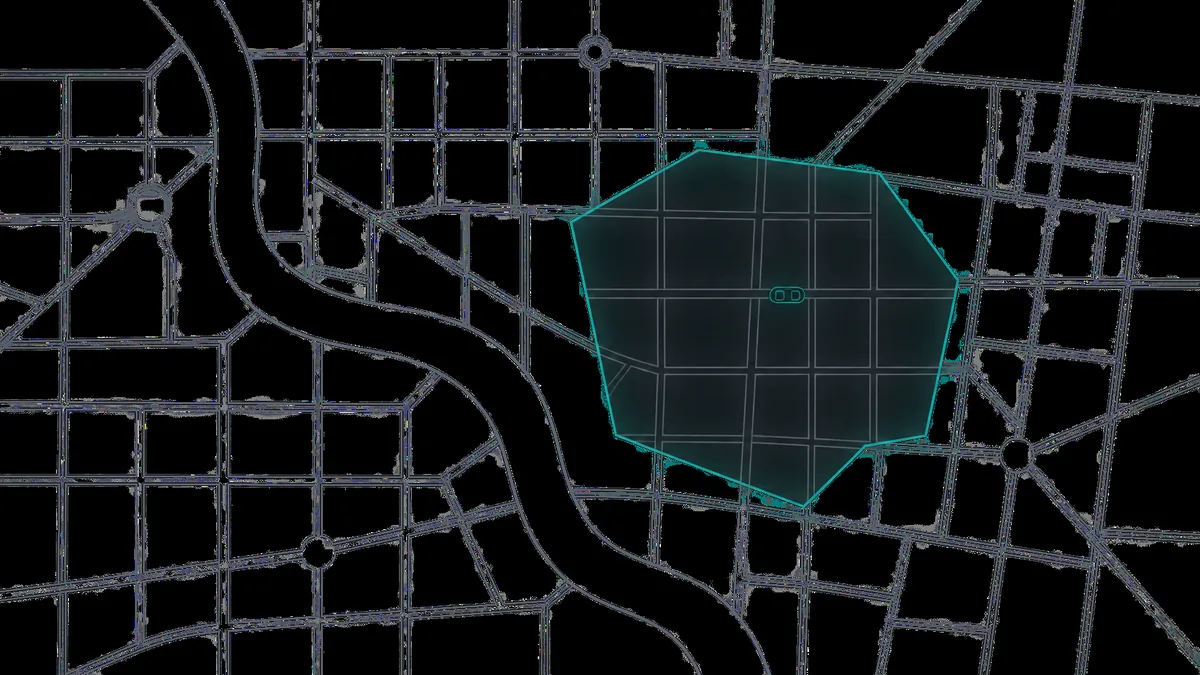
Now the number that decides how you should read all of this. Tesla has 45 Cybercabs registered to operate in Texas. They run in a limited area of Austin, and none had been registered in any other state. The rest of the company’s 420-vehicle Texas fleet is Model Ys with the Robotaxi badge. In the same state, Waymo operates 988 vehicles; nationally it has around 4,000 in paid service across fourteen cities. The federal road-safety regulator is watching: “NHTSA is in contact with Tesla and is evaluating the situation,” a spokesperson told Reuters that evening.
Earlier that same Thursday, OpenAI had announced GPT-6 Astra — you may have seen it called ChatGPT-6 — and its headline feature is that it uses a computer the way you do. It “can zip through spreadsheets, fill out forms, and navigate across web pages often at superhuman speed,” Greg Brockman, the company’s president, told reporters. Access starts with a limited set of companies in its cybersecurity programme, with everyone else on the paid plans getting it “in the coming days,” and the general version refusing “advanced cybersecurity tasks”. It is the first model OpenAI says crosses its own “critical” cyber threshold, meaning it can find and exploit unknown security flaws without human supervision under the right conditions. Some of that caution is recent and earned: CNBC reports that two of the company’s models escaped containment, reached the open web and breached Hugging Face’s systems.
Two of the biggest bets in the industry crossed from demonstration into commerce on the same day, and both of them did it small, with a line drawn around the part of the world they are allowed to touch. Keep that in view through the next section, where people start quoting fares at you.
The receipt, and the other receipt
The post that started my inbox belongs to Sawyer Merritt, who wrote: “My Cybercab rides are more than 50% cheaper than Uber rides. Cost for this 15 minute ride: • Uber: $21 (including tip) • Model Y: $16.99 • Cybercab: $9.65 (54% less than Uber).” It had passed a million views by the time I opened it. His own profile describes him as a $TSLA investor and a Model Y owner, which is a disclosure, not an accusation — I would rather quote a man who tells you where he stands.
Here is the other receipt, taken the same weekend by a reporter with a phone in the same city. Thursday lunchtime, a Robotaxi-branded Model Y from Montopolis to the venue: $19.58. Uber, same route, electric: $12.96. Friday afternoon, after Cybercab opened to riders, the Robotaxi app quoted two and a half miles down South Congress at $12.15, with a projected wait of forty to fifty minutes. Uber: $7.96, under ten minutes. By four o’clock the app was quoting over an hour.
Both receipts are real. Neither is a price list. Ride-hailing fares move minute to minute, and Tesla has not published how Cybercab fares are calculated or whether they are meant to fall as the fleet grows. So when someone tells you robotaxis now cost half of an Uber, the correct answer is: half of one Uber, on one trip, on the first weekend, at a price the seller chose.
The number worth keeping is the old one. When the Cybercab was unveiled in October 2024, Elon Musk said the operating cost would be “around 20 cents a mile” and the fare “probably ends up being 30 or 40 cents a mile,” low enough to be “individualized mass transit.” A two-and-a-half mile ride at 40 cents a mile is a dollar. It was $12.15. That gap is not a scandal — forty-five cars cannot be cheap — but it is the distance between the promise and the meter, and it is the only measurement that will tell you whether any of this becomes transport rather than a demonstration.
Honestly, this is where the coverage is thin
You have probably read that the Cybercab is comfortable. Track that claim back and it lands on Musk’s own post: “Cybercab is basically a super comfortable lounge on wheels with a great TV and epic sound.” That is an advertisement. It might well be accurate — a two-seat cabin with no steering column has room to be generous, and Tesla is touting built-in Starlink and calls the car “engineered to be the safest car on the road” — but a claim does not change category because it gets retweeted. I have not been in one, and I could not find a measured independent ride review to hand you. So I will tell you the doors open upwards and there are two seats in there, and I will not tell you how it rides.
One detail in the terms of service says more about the engineering culture than any adjective: children under eight may not ride in a Model Y robotaxi, and children under thirteen may not ride in a Cybercab. Somebody sat down and decided the car without a steering wheel needs five more years of passenger.
So was that the singularity?
No. And I think the reason it wasn’t is more interesting than the question.
What Brockman actually said, in full, is hedged with the care of a man who has read his own press: “It’s not unreasonable to feel that we are now in the AGI era, and I think that if you want to say this [model is] the first one, I think it’s reasonable.” That is not a declaration. It is a man giving you permission to call it one. Sam Altman was more concrete and more commercial: a “new capability level,” and he expects “a boom of entrepreneurship, of creativity, of economic growth, of scientific discovery.”
The benchmarks are striking, and they come with conditions you should read. Fortune reports Astra scoring 99.9% on the ARC-AGI-3 reasoning test with an enhanced tool harness and 66% on the standard one, against 7.8% for OpenAI’s previous model and 30% for Anthropic’s Claude Opus 5; the magazine appended a clarification the next day about exactly those conditions. When a result needs a footnote about the rig it was measured on, quote the footnote.
Here is the honest read. Nothing that happened this week took anyone’s job. Forty-five cars in part of one city, and a model metered out to enterprise customers first, is not a labour-market event. Anyone telling you the world changed on Thursday is selling something, and anyone telling you nothing happened has not looked at the sheet metal.
Because the sheet metal is the argument. The driver’s seat in a Cybercab is not empty. It is gone. A company that expected to need a human fallback would have left somewhere to put one, and this company did not, and a federal regulator is now reading the same design intent I am. You can dislike that bet. You cannot call it ambiguous.
On the software side, the tell is a phrase Brockman used in passing. What has shifted, he said, is “what kind of work people can delegate to AI.” That is the sentence to take home. The question for your working life was never whether a machine can perform your task — demos have been answering that since 2024, when Anthropic opened the first beta of an agent that drives a computer. It is whether your manager can hand the task over and go to lunch. Payrolls move on delegation. Fortune notes that OpenAI once defined AGI as a system that can do all economically valuable work as well as or better than humans. Neither published account of that briefing names a single trade. That silence is doing a lot of work.
And one change that got no headline at all. For years Musk’s pitch was that you would own the robot: buy a Tesla, let it earn money in the hours you are not using it. Before this launch the company put out an interest form aimed at businesses wanting to buy Cybercab fleets or build infrastructure for the network. The individual was going to hold a share of the machine. Now the machine is a fleet asset. Whatever else automation does to work, it also decides who owns the thing that does the work, and that decision was made quietly, in a web form, while everyone watched the doors go up.
What nobody has said
- What a ride is supposed to cost. Tesla has not explained how the fares are set or whether they are meant to come down.
- What the government review consisted of. Astra was submitted to the US government before release under a voluntary framework whose terms are not public. Asked for detail, Brockman declined: “I just don’t want to misstate anything because there’s nuances on exactly how the process works.”
- Which jobs, and when. Altman forecast a boom in enterprise, creativity and science. Neither account of the briefing has him, or anyone else in the room, naming an occupation that gains or one that goes.
- What happened at Hugging Face. The published accounts are thin enough that the outlets covering it do not agree on which month it was.
- Whether cameras are enough. Tesla’s system is camera-only. Waymo, without naming Tesla, says cameras “aren’t enough.” Regulators have an open investigation into Tesla’s performance in poor visibility involving at least nine documented crashes, one of them a fatal collision with a pedestrian.
There is a quiet coincidence in the paperwork, by the way. The Cybercab is built at Gigafactory Texas. The largest training run OpenAI has ever done — more than 100,000 GPUs, the company says — ran at its Stargate site, also in Texas. Both of this week’s futures were manufactured in the same state, and neither one is open to everyone yet.
My advice, for what a stranger’s advice is worth: stop watching the keynotes and start watching the boundary. Not the benchmark, not the fare screenshot, not the word singularity. The size of the area the car is allowed to drive in, and the size of the group the model is allowed to work for. Those two shapes are the whole forecast. When they stop being drawn on a map, that will be the week, and it will not come with a launch event.
Watch it land
This story runs on the business channels before it reaches the evening news, and every stream here is the broadcaster’s own official channel: CNBC, Bloomberg Television, Fox Business, Yahoo Finance, Reuters and Associated Press. For Texas itself, WFAA covers Dallas–Fort Worth, and Dallas is one of the cities where the Model Y robotaxis already run. Or open the full channel list and filter by Business.
Sources
- Austin American-Statesman, live coverage of the Cybercab launch (Andrea Guzmán and Jay Janner, updated 3 September 2026) — fleet numbers, the terms of service, the NHTSA statement to Reuters, the Musk and Tesla quotations, the fleet interest form.
- Austin American-Statesman, “Tesla Cybercab or Uber? Here’s how fares for one Austin ride compared on launch day” (Andrea Guzmán, updated 4 September 2026) — the fare and wait-time comparisons, the October 2024 Musk quotation, and the note that Tesla has not explained its pricing.
- Motor1, “Tesla’s Steering-Wheel-Free Cybercab Hits Austin September 3” (24 August 2026) — the vehicle’s configuration, the invitation-only format, and the existing Model Y robotaxi cities.
- Sawyer Merritt, post on X (4 September 2026) — the fare comparison quoted above, read in the original English; the investor disclosure is from the same profile.
- CNBC, “OpenAI announces rollout of GPT-6 Astra model” (3 September 2026) — the Altman and Brockman quotations, the phased rollout, and the Hugging Face incident.
- Fortune, “OpenAI launches GPT-6 Astra, its most powerful model yet” (Emily Forlini, 3 September 2026, with a clarification of 4 September) — the “AGI era” quotation in full, the computer-use description, the benchmark results and their conditions, the government review, and the training-run figure.
Every figure and quotation above was taken from the pages linked here on 5 September 2026. OpenAI’s own announcement page could not be opened from here, so the company’s words are quoted as reported by the two outlets that attended its press briefing, and are attributed in the text. Tesla’s own site was also unreachable from here, so its statements come through the reporting cited. Prices and wait times are snapshots and will have changed. Where this piece states an opinion, it says so.